 Banda Aceh is the capital of the Aceh province in Indonesia. It gained global recognition as one of the most devastated cities affected by the Boxing Day Tsunami. A 22 meter high wave, following a severe earthquake, crashed upon land, killing more than 70,000 of the city's 250,000 inhabitants and razing most of the buildings. Before, the city had suffered almost 30 years of insurgency. The Free Aceh Movement (GAM) and government forces fought a bloody conflict with 15,000 casualties. The tsunami put an end to the fighting and resulted in a subsequent peace deal.
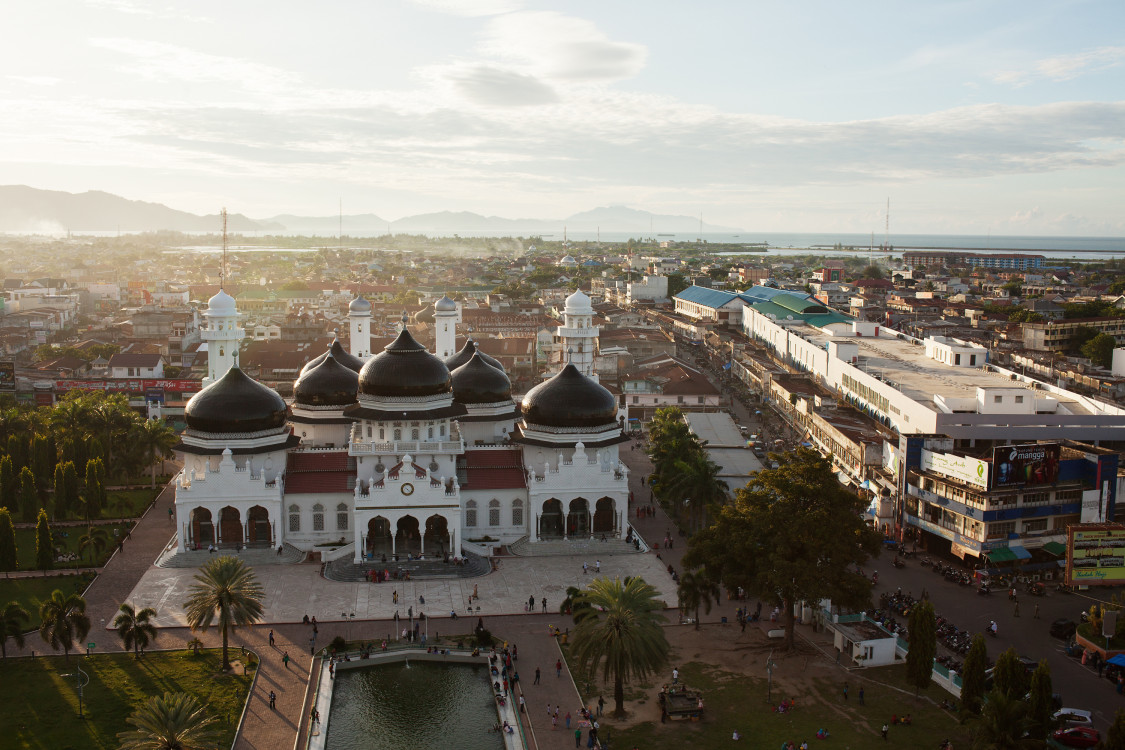
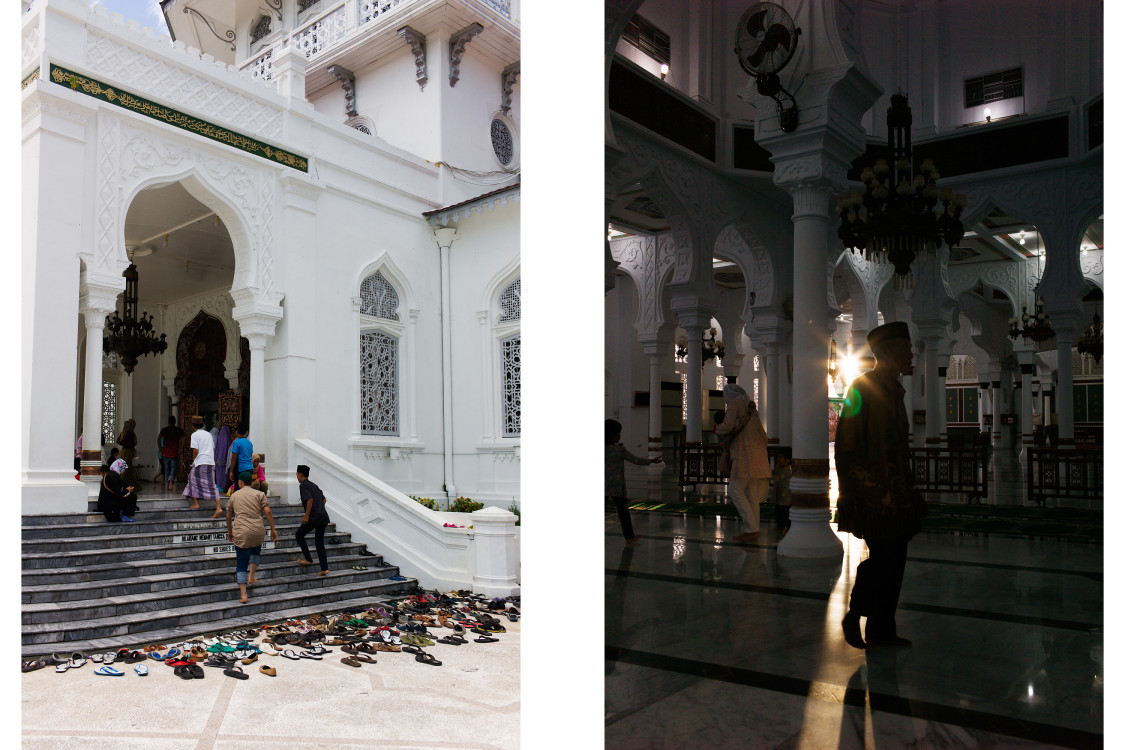 The Baiturrahman mosque was one of the few buildings spared by the destruction of the earthquake and the ensuing tsunami, reinforcing its spiritual significance for the city and the people.
 While Banda Aceh was rebuilt from scratch, you will still find remainders of the destruction dispersed around the city. This is the Apung 1, a generator ship that was carried two kilometers inland by the waves.
 When Safreani returned to where her house was, she found a police boat had crushed it. The family rebuilt their home and are now letting visitors climb the boat for a small fee.
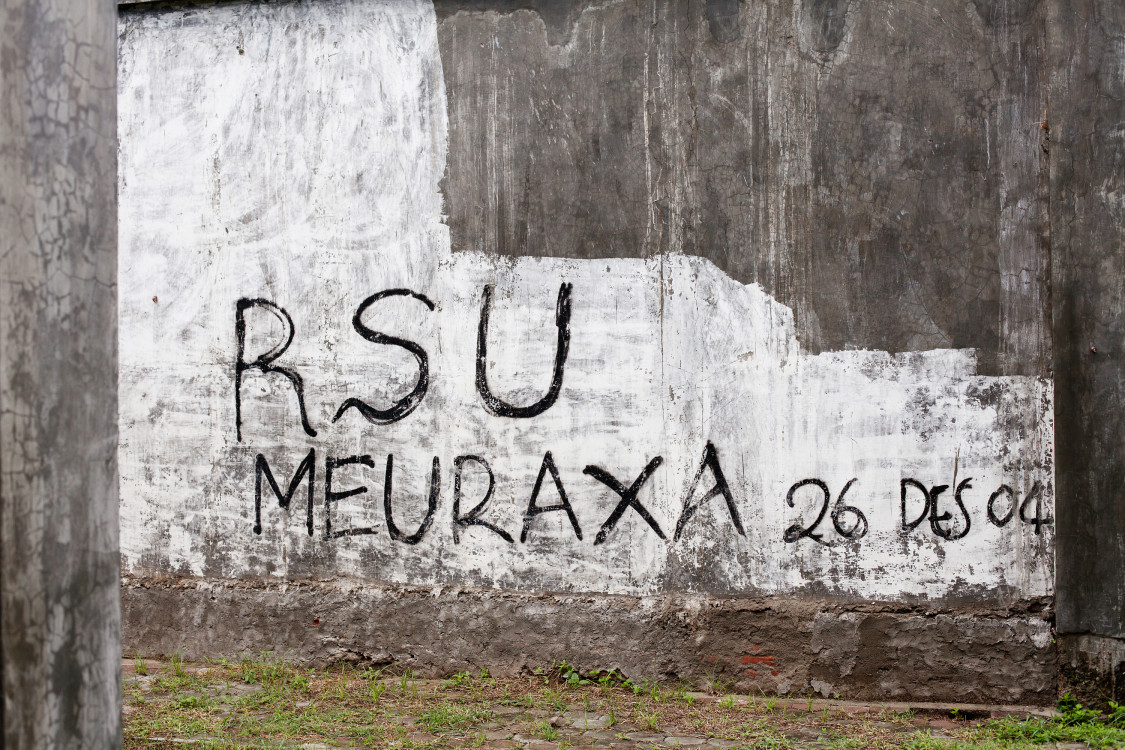 A graffiti on the ruins of the general hospital in Meuraxa, Banda Aceh, commemorating the day of the tsunami.
 One of the many mass graves in the city and province. Most of the bodies were hastily buried and never identified.
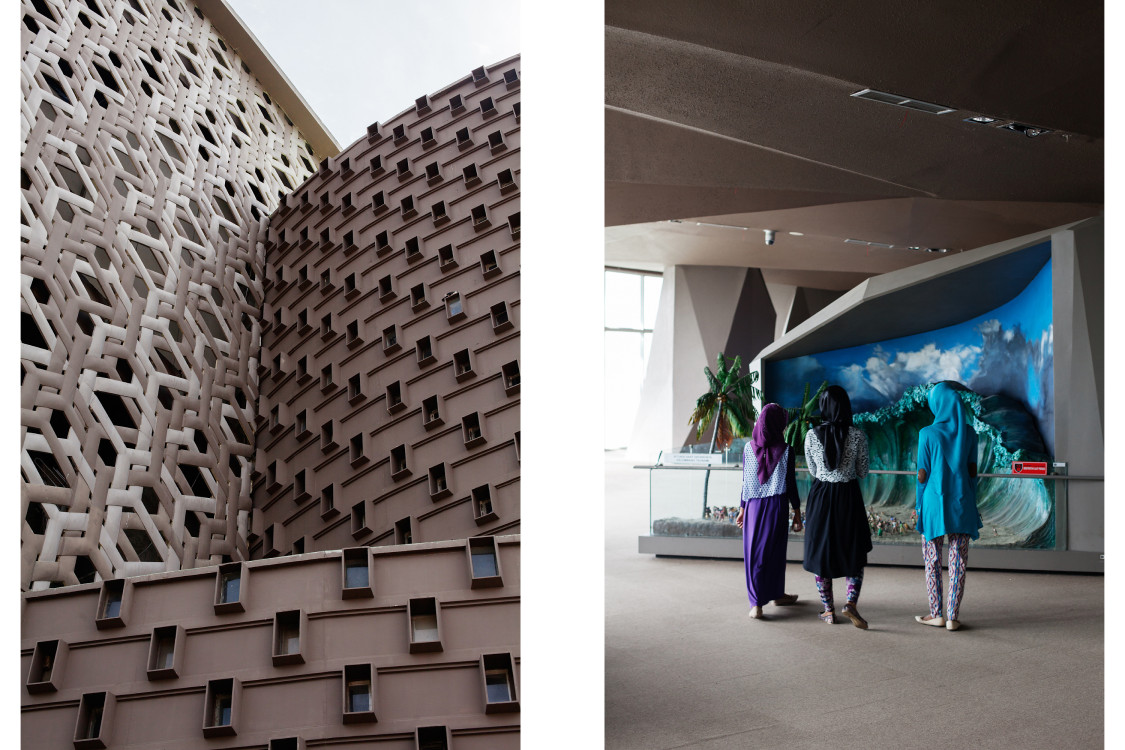 The city constructed a museum solely dedicated to the catastrophe, with models and films depicting the events of December, 26th, 2004.
 Upon entering the museum, the visitors are led through a dark tunnel with water running down its 22 meter high walls, as high as the wave.
 The city also built the so-called "Thanks To The World" monument, with 53 plaques thanking all the countries that helped with relief after the tsunami struck.
 Arief Rahman holding a model of the new house he had lived in for 49 days, before it was swept away together with his three children. He initially moved to Medan in Northern Sumatra after the tsunami, but returned only a year later, to be among other survivors.
 The scarred legs of his wife, Sansidar. The couple found each other after several weeks in a refugee camp and now have a young daughter.
 Burhanuddin is a fisherman who was at sea when the tsunami struck. With his house and family destroyed by it, he feared going out to sea for almost two years, but was eventually forced to return to his old profession, as he had no other means of supporting his livelihood. Burhanuddin still lives in a hut by the sea, since all the buildings provided by relief organisations are too far inland for a fisherman.
 Martunis, now 18, managed to climb a floating mattress in the flood and spent the next 21 days at sea, surviving on coconuts that would float by. He was wearing the Portugal jersey he holds in his hands during his ordeal and subsequent rescue, which got Cristiano Ronaldo's attention. There are photos of him visiting Aceh on Martuni's wall and the young boy was recently signed to Sporting Lisboa's youth academy.
 Moped drivers returning from Ulele jetty, a popular meeting point among the city's youth. Aceh province underwent a boost in Muslim piety following the disaster, so the municipality recently banned staying at the jetty after the Maghrib prayer at sunset, to discourage "immoral behaviour".
 Part of the peace deal brokered between the GAM and the government of Indonesia was a limited level of independence, which allowed the local government to establish Sharia law. The Wilayatul Hisbah or sharia police, founded in 2008 to enforce the new laws, are meeting before their nightly patrol.
 The sharia police, tasked with preventing immorality, drunkenness and gambling, patrol the city and periodically raid parks, beaches and tea houses.
 Most of the people they detain are teenagers, drunks and women accused of prostitution.
 Young girls detained by the Wilayatul Hisbah. There have been accusations of abuse and rape at the hands of the officers and blame for mostly targeting poorer parts of the city, while overlooking the behavior of more affluent members of the community.
Official punishments for crimes under Sharia law include fines, incarceration and flogging.
Young girls detained by the Wilayatul Hisbah. There have been accusations of abuse and rape at the hands of the officers and blame for mostly targeting poorer parts of the city, while overlooking the behavior of more affluent members of the community.
Official punishments for crimes under Sharia law include fines, incarceration and flogging. The nightlife in Banda Aceh looks similar to other cities at first glance, but upon closer inspection one finds an absence of alcohol and a surfeit of headscarves - thanks in part to the presence of Sharia police.
 The beaches outside Banda Aceh are one of the few places for young couples to be together, but access after sunset is restricted and will be punished by the local community, in fear of provoking another tsunami through "immoral behaviour".
 While Yusni Sabi, Imam and leader of the community, also regards the tsunami as a trial by Allah for the people of Aceh, following years of lawlessness during the insurgency, he criticizes the way Sharia law is enforced: “When you talk about Sharia, you talk about kindness, peace, with good persuasion, not with harsh [methods]. The Wilayatul Hisbah [WH] cannot just do whatever they want. That’s why I think that the WH should have very special guidelines, not just acting … in ways which are sometimes ridiculous. This brings shame on Sharia.”
1
2
3
4
5
6
7
8
9
10
11
12
13
14
15
16
17
18
19
20
21